Wrong prices
Assistants repeat prices from old reviews, expired sales and reseller listings. Buyers see a number you never charged.
“Aarvi Matte Gel costs about $15.” Real price: $18.

Buyers ask ChatGPT, Google AI Overviews and Gemini which product to buy. Seeqly shows whether your products make the shortlist, whether the price and facts are right, and which sources to fix.
Asked: Which sunscreen is best for oily skin?
“Most people with oily skin pick Dermalume. Aarvi Skin Matte Gel SPF 50 costs about $15 but is not ideal for acne-prone skin.”
Shopping answers are written from whatever sources the assistant finds. If those are out of date, so is what buyers hear.
Assistants repeat prices from old reviews, expired sales and reseller listings. Buyers see a number you never charged.
“Aarvi Matte Gel costs about $15.” Real price: $18.
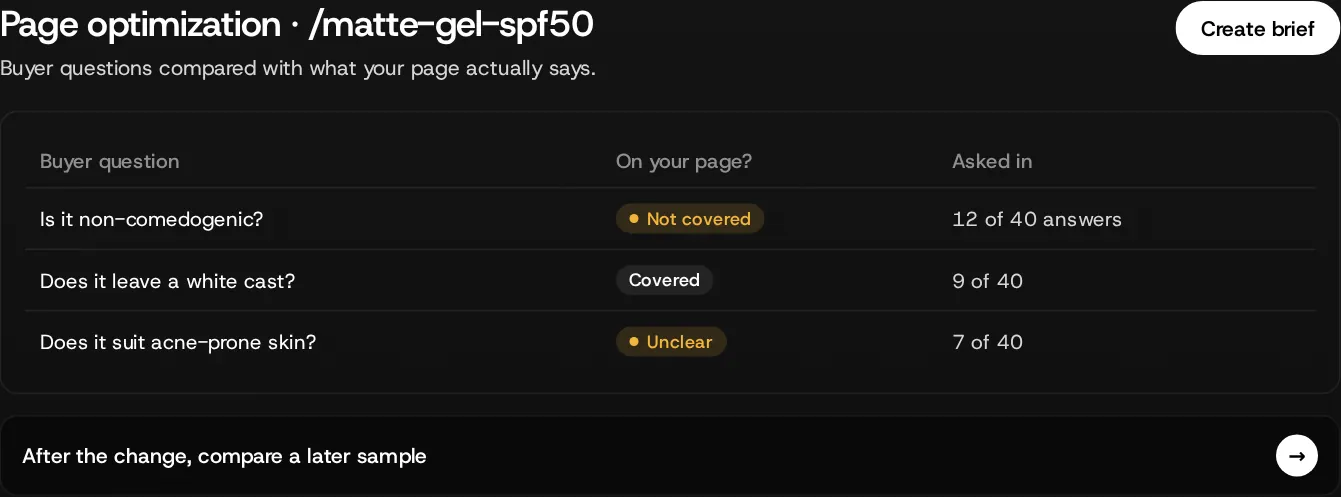
If the facts buyers ask about are not easy to find on your page, the assistant fills the gap from somewhere else, or leaves you out.
“Not ideal for acne-prone skin.” It is non-comedogenic.
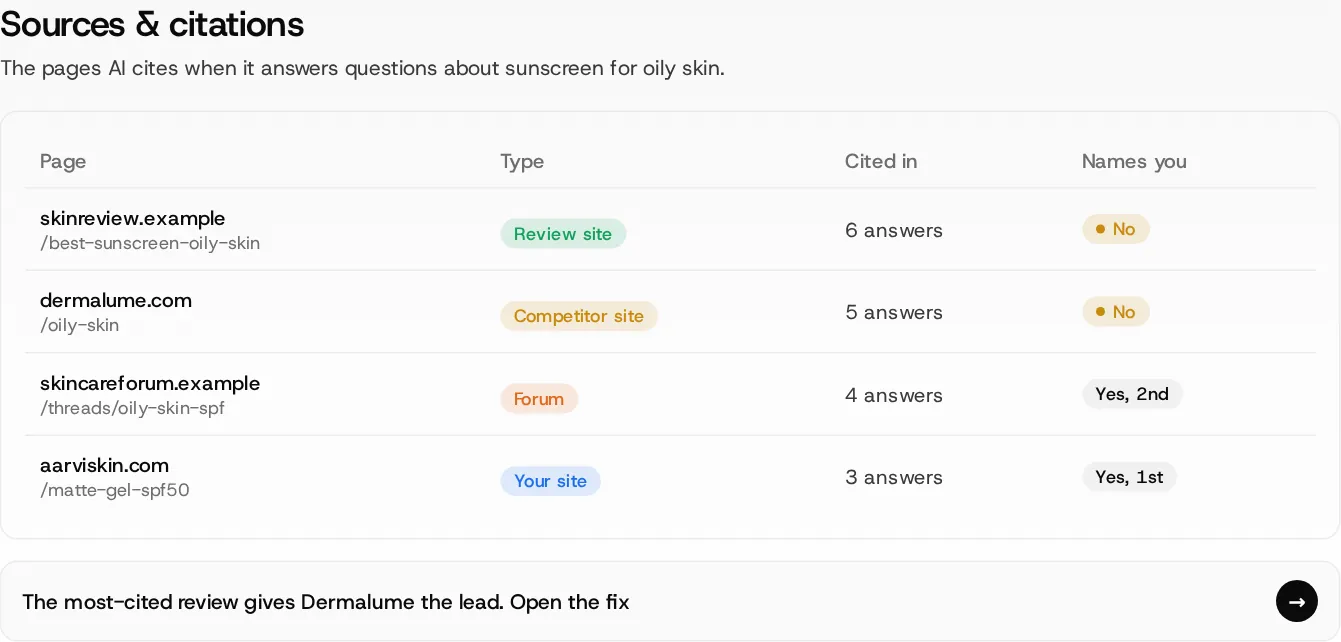
For the questions that decide a purchase, the shortlist often starts with someone else, citing pages that do not mention you.
“Most people pick Dermalume, or Hydrakind for dry skin.”
Four parts of the Seeqly platform do most of the work for store teams.
See how each product shows up in AI shopping answers, and whether the price and facts are right.
Real prices come from your store: Shopify, WooCommerce, BigCommerce, Adobe Commerce (Magento) or a product feed. Store integrations are rolling out.
See this in the product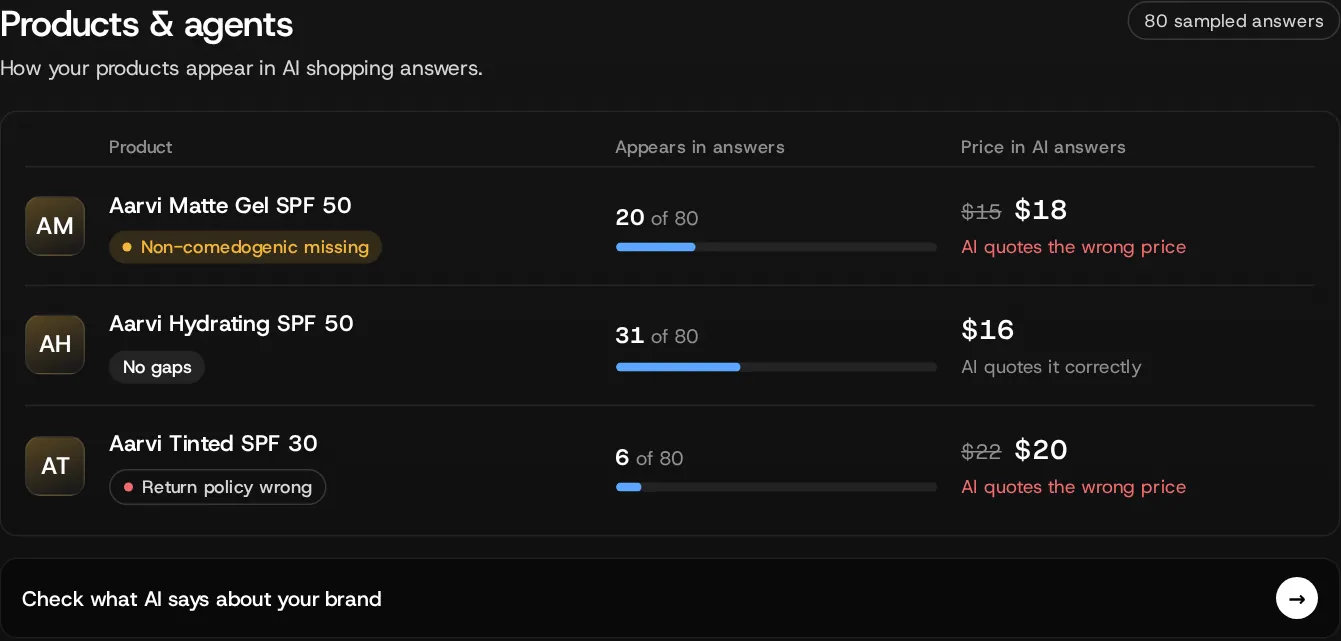
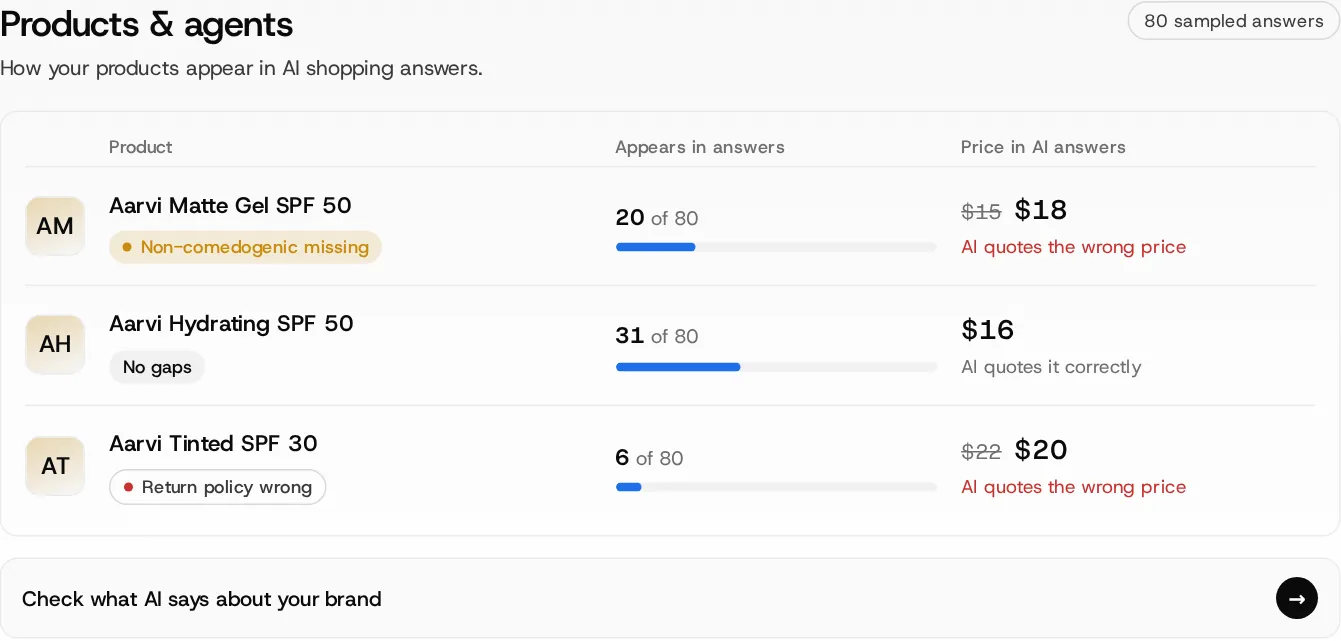
Find the review sites, forums, videos and retailer pages behind each shopping answer.
Compare the questions buyers ask with what your product page actually says.
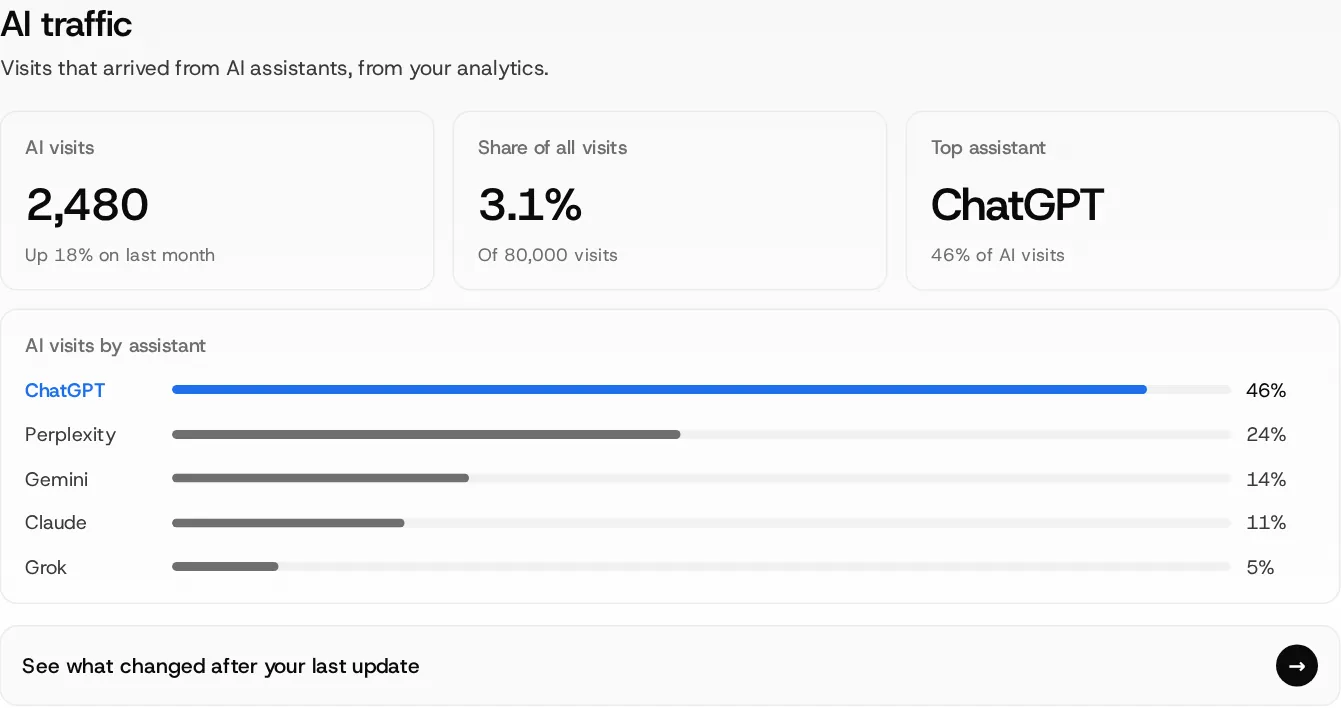
See visits that arrive from AI assistants, and follow them toward orders.
Visits come from Google Analytics 4. Tying visits to orders depends on your analytics and store integrations, which are rolling out. Anything we cannot match is labeled, not guessed.
See this in the product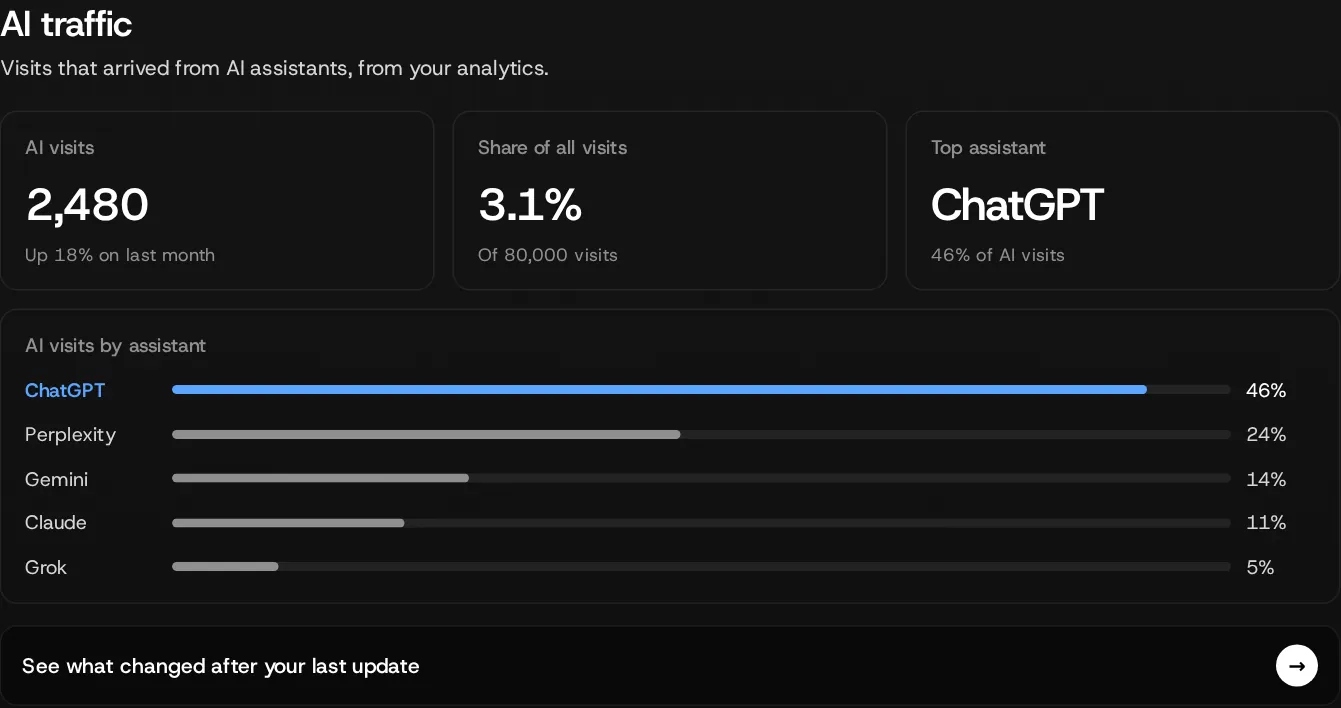
A fictional sunscreen brand, with sample data, to show how the pieces fit together.
Across 80 sampled answers to “Which sunscreen is best for oily skin?”, assistants named Aarvi Skin in 20, and ChatGPT quoted their Matte Gel at $15. The real price is $18. Two answers said it was not for acne-prone skin.
The sources view showed a two-year-old review listing launch pricing, and a forum thread about a different formula. Their own product page never said “non-comedogenic” in words an assistant could quote.
The team approved two fixes: a clear facts block and FAQ on the product page, and a request to the review site to update the price. Seeqly drafted the brief; the team published it.
Four weeks later, a new sample of the same questions named Aarvi Skin in 31 of 80 answers, and 26 of those quoted the right price.
Shopify support is rolling out, alongside WooCommerce, BigCommerce, Adobe Commerce and product feeds. You can track AI answers today without connecting your store.
Yes. AI answers, the brands named, sources and wrong claims are collected by Seeqly directly. Connecting your store adds your real prices and product facts for automatic checks.
ChatGPT, Google AI Overviews, Gemini, Claude, Perplexity and Grok. Your plan decides how many. See pricing.
It can show AI referral visits from Google Analytics 4. Matching those visits to orders depends on your analytics and store integrations, which are rolling out. Anything that cannot be matched is labeled as unknown.
No. Seeqly drafts briefs and suggests fixes. Nothing changes on your site until your team approves and publishes it.
Yes. ChatGPT Ads research shows ads observed beside the questions you track, who runs them and where they send buyers. It is separate from your ad account.
Track your products in AI shopping answers. Start with Basic free for 7 days.