AI Visibility Software: What to Look For Before You Buy
Evaluate AI visibility software by prompt tracking, answer evidence, citations, reporting and cost. Follow a practical trial checklist before choosing a tool.
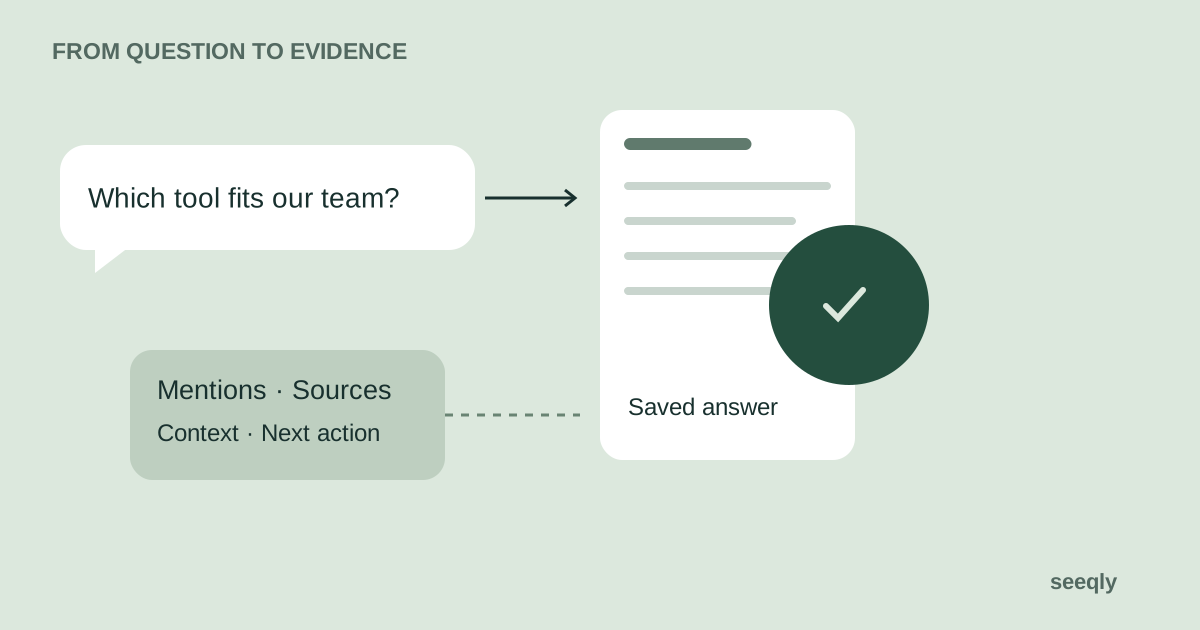
AI visibility software helps you review how AI answers mention your brand, describe your products and link to sources. The useful output is evidence your team can act on: a customer question, the answer it received, and the information behind that answer.
If you are evaluating a platform, start with that job. A polished dashboard can hide a weak prompt set, unclear calculations or results you cannot inspect. This guide explains what to compare, how to run a useful trial and when a simpler process may be enough.
Seeqly publishes this guide and sells AI visibility software. The buying criteria below are our suggested evaluation process, not an independent ranking of vendors.
Start here: choose the job you need to do
There are several reasons to buy a monitoring tool. Choose the one that will matter in your next review meeting, then follow the relevant guide.
Scroll horizontally to read the full table.
| Your question | Start with | What you should get from it |
|---|---|---|
| Which software fits our team? | AI visibility tool buying guides | A shortlist and practical evaluation criteria |
| Can we track our own buyer questions? | Prompt tracking software | Coverage, scheduling and evidence checks |
| Why are other sites being cited? | AI citation tracking | A method for inspecting source links |
| How do we organise ongoing monitoring? | Campaigns by buyer intent | A usable structure for the prompt set |
| How do we compare Seeqly with another tool? | Product comparisons | Vendor context and questions to test |
| What should we report to leadership? | AI search KPIs for CMOs | Defined metrics and their business limits |
These paths belong to the same workflow: choose the questions, inspect the evidence, make a decision, and review it again. You do not need to buy a different tool for every label in the category.
What AI visibility software should help you answer
A useful platform lets you investigate whether your company is being considered for relevant buying tasks. It should also help you spot inaccurate descriptions and understand which sources appear in the sampled answers.
For example, a software company may discover that an assistant recommends it for small teams but describes its integrations incorrectly. The next task is to check and improve the relevant documentation. A higher headline score would not resolve that problem on its own.
Keep three things separate when reviewing a product demonstration:
- Presence: was your brand named in the answer?
- Representation: what did the answer say, and was it accurate?
- Sources: which links accompanied the answer, and what did they support?
A brand can be named without being recommended. A page can be cited without generating a visit. A tool that preserves these distinctions makes reporting easier to trust.
Compare six capabilities before choosing a plan
1. Prompt tracking that reflects your market
Check whether you can supply your own questions and organise them by buyer intent. Generated suggestions can help you get started, but someone needs to review them against actual customer questions.
Ask how the platform handles prompt edits. If changing wording breaks the historical comparison, the report should make that clear. See our prompt tracking software guide for a more detailed checklist.
2. Clear engine and setting coverage
Get the exact coverage included in the proposed plan. An engine name alone does not tell you the mode, language, location settings, run frequency or collection method.
Ask how the tool distinguishes a failed run from an answer that did not mention your brand. Missing data should not quietly become a negative result.
3. Answers you can inspect
Open the original answer behind a summary metric. Look for the prompt, timestamp and available source links. Read a few ambiguous examples, such as a passing mention or a comparison that favours another product.
If your team disagrees with a label, find out how it can review or correct the interpretation. The goal is an understandable record, not a score you have to accept without context.
4. Citation review with sensible boundaries
A citation report should let you inspect the linked URL and its answer context. Separate sources on your own site from third-party pages, then check whether each supports the associated claim.
A crawler request is a different event. If the product also offers bot analytics, ask what integration supplies that data. A page fetch does not establish that the page was cited or recommended.
5. Reporting that works for its audience
Try preparing the report your colleague or client will actually use. Can they understand the scope, inspect an example and identify the next action? Check exports, shared access, client separation and historical retention if those are requirements.
For an agency, keeping each client's evidence and permissions separate matters as much as a well-designed chart. For an in-house team, a concise monthly review may be enough.
6. A complete cost for the workload
Compare the same workload over the same billing period. Include prompts, engines, repeat runs, brands, seats, exports and any necessary add-ons. Ask what happens when a limit is reached.
For illustration, 20 prompts checked on three engines twice a week creates 120 prompt-engine checks per week. Vendors may count or bill usage differently, so confirm their definition before using that calculation to compare plans.
Run a trial with one real buying task
Choose a product and audience you understand well. Prepare a manageable set of discovery, comparison and brand-verification questions. Keep branded prompts in their own group so expected brand mentions do not inflate a discovery result.
Use the same questions in each trial with comparable settings where available. Save the outputs and ask someone who did not set up the trial to review a few results. This shows whether the evidence is understandable beyond the person running the test.
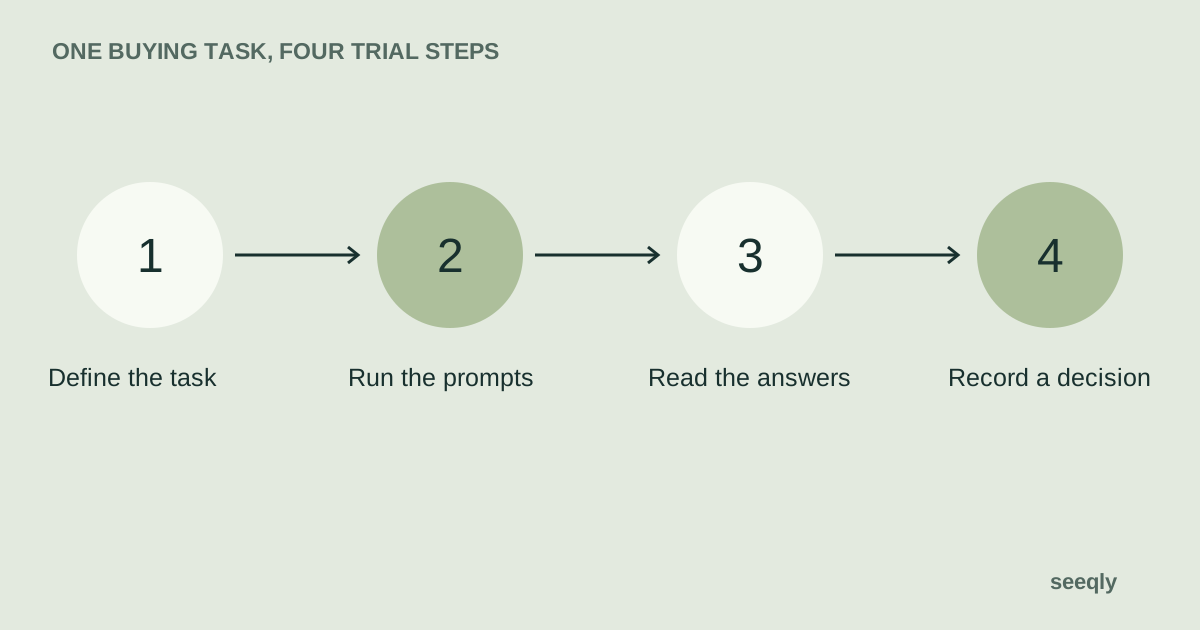
A practical trial ends with a completed work item: a product detail corrected, a missing guide identified or a reporting question answered. It should also leave a record of where the tool did not meet your requirements.
How Seeqly fits into this workflow
Seeqly organises monitoring around campaigns and prompts. You can use the results to review brand mentions, descriptions and cited sources, then investigate the relevant pages or questions.
Start with the feature overview and the campaign planning guide. Check current pricing for plan coverage, limits and billing terms. If you manage several clients, review the agency solution against the access and reporting your team needs.
Compare Seeqly with other products using the same evidence checks. Our comparison directory links to official vendor information and explains what to test; it does not claim a universal winner.
When a spreadsheet may be enough
A manual review can be a sensible starting point when you have a small set of questions and only need an occasional check. Record the question, engine, date, answer, links and follow-up in a consistent format.
Software becomes more useful when repeated collection, historical comparison or multiple reviewers create a maintenance problem. Buy it to solve that problem. A subscription cannot replace understanding your customer or keeping product information accurate.
Questions to ask before signing up
Is a higher visibility score in one tool a better result?
Not necessarily. Check the sample, counting rules, engine settings and competitor set. Two tools can calculate different scores from different observations. A trial score is not evidence that the tool itself improved your visibility.
Does monitoring improve rankings or AI recommendations?
Monitoring collects observations. Improvements depend on what your team learns and changes, and source selection remains outside your control. There is no guaranteed recommendation, citation or ranking benefit from buying software.
Can a platform tell us the revenue from every AI mention?
A mention does not establish a website visit or sale. Review identifiable referrals and defined conversions in your analytics, and keep broader influence as a separate research question. Our AI referral measurement guide explains how to compare the data responsibly.
What is the best next step?
Write down one buyer task and the evidence you need to review it. Use that brief to test a short list of tools, then choose the workflow your team can maintain. If you want to evaluate Seeqly, review the plans and start with a campaign built around that task.